
Brakes are the single most important safety system on your car. Whether you’re stopping at a light or avoiding an obstacle, the components that create friction and slow your wheels need to work reliably. Two common friction systems are brake pads (used with disc brakes) and brake shoes (used in drum brakes). Knowing how they differ helps you spot problems early and choose the right repair or replacement. Busy Bots Auto Repair can inspect either system, but first let’s break down what each one is and how they compare.
What are brake pads and brake shoes?
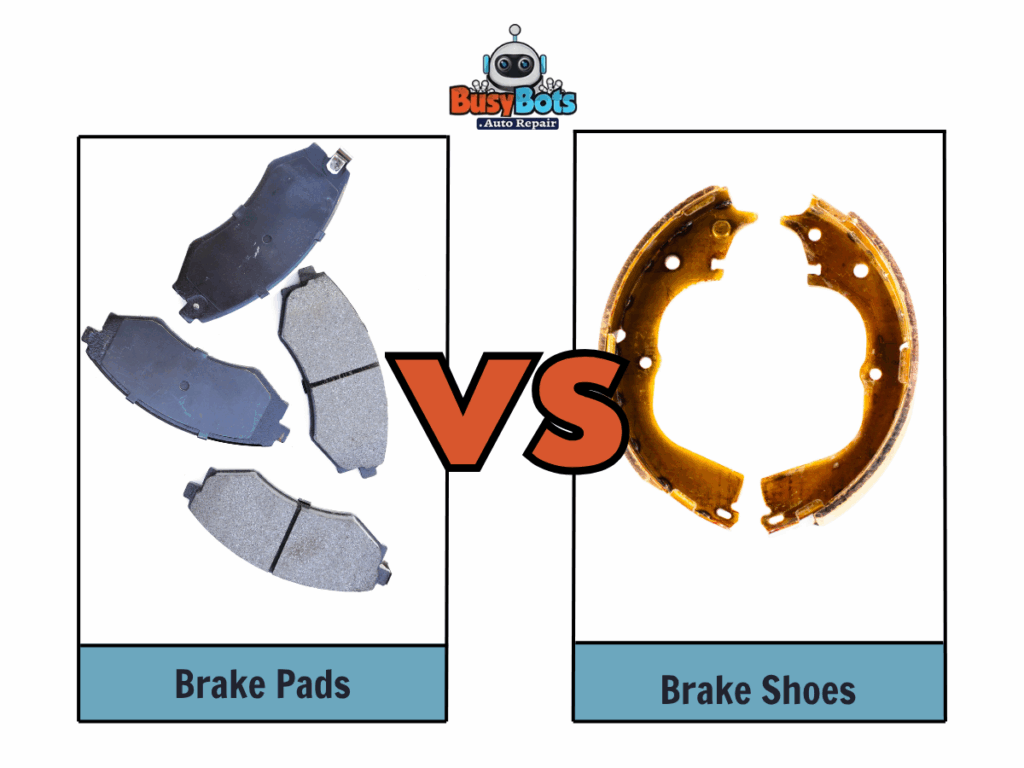
Brake pads are the replaceable friction pieces used in disc brake systems. A caliper squeezes the pads against a spinning rotor (disc) to slow the wheel. Most modern passenger cars use disc brakes at least on the front axle; many use discs on all four wheels.
Brake shoes are crescent-shaped friction pieces used inside a brake drum. When you press the brake pedal, the shoes are pushed outward to press on the inside of the drum, creating the friction that slows the vehicle. Drum-and-shoe assemblies were common historically and still appear on the rear axle of some vehicles today (especially older models, light trucks, or economy cars).
Key differences: how they stop the car
- Direction of force: Pads are squeezed inward against a rotor (compressive force). Shoes are pushed outward against a drum (expansive force).
- Stopping power: Disc brakes with modern pads generally deliver stronger, faster stopping performance and dissipate heat more efficiently. That’s why manufacturers put discs on the front wheels (where most braking load occurs). Drum/shoe systems can provide adequate stopping power for light-duty rear applications but typically require more force and can fade sooner under repeated heavy use.
- Heat management: Rotors cool more quickly than drums, so disc systems resist fade better during repeated hard braking.
- Exposure & contamination: Pads and rotors are exposed; they self-clean as the pads sweep debris off the rotor. Shoes sit enclosed inside the drum, which shields them from some contaminants but can trap moisture, rust, and grime that accelerate wear.
Front vs. rear brake pads — why it matters
On most vehicles, the front brakes do most of the work — typically 60–70% of stopping force — because weight transfers forward under braking. As a result:
- Front pads generally wear faster and are often larger, designed for higher heat and load.
- Rear pads or shoes handle less load and can last longer, but if the rear system is a drum/shoe design, additional maintenance (like adjusting the shoes or addressing trapped debris) may be needed.
When you get a brake inspection, Busy Bots technicians check front and rear systems separately and advise on best practice: sometimes only the fronts need replacement; other times both axles benefit from service for balanced braking.
Lifespan and replacement timing
- Typical pad life: Many pads last between about 30,000 and 70,000 miles depending on driving style, vehicle weight, and pad material (semi-metallic, ceramic, performance-oriented). City stop-and-go driving shortens life; highway driving is easier on pads.
- Typical shoe life: Shoes may last longer in light-use rear applications, but exposure to moisture or heavy loads accelerates wear.
- Signs it’s time to replace: grinding or squealing noises, pulsation in the brake pedal, longer stopping distances, visible thin lining (or warning indicators), or brake warning lights. If you notice any of these, schedule an inspection promptly.
Service complexity & costs (what to expect)
- Brake pad replacement is generally quicker and more straightforward. A typical axle pad replacement (parts + labor) can vary widely by part quality and vehicle type. Expect differences between economy and OEM or performance pads.
- Brake shoe service can take longer because drums may be harder to remove, and adjustments inside the drum are more involved. Drum systems also sometimes require additional work (hardware kits, wheel cylinders).
- Cost ranges: prices differ by vehicle and region. As a ballpark, many pad jobs fall in a mid-range bracket per axle, while full drum/shoe jobs can be similar or slightly lower for parts but higher in labor for some makes. The best approach is a free inspection and written estimate from a reputable shop.
Materials & performance choices
Brake pads come in several materials: semi-metallic (durable, strong heat handling), ceramic (quieter, cleaner rotors), and specialized performance compounds for track use. Shoes use different lining materials optimized for drum contact. Your technician can recommend the best option based on driving habits and vehicle needs.
Why proper installation and balancing matters
Replacing only one axle or mixing very different pad materials front-to-rear can upset brake balance, leading to pulling, uneven wear, or ABS issues. Always follow the manufacturer’s recommendations and use quality parts. Busy Bots follows industry best practices: replacing in pairs, using correct torque, and performing a final road test.
When to choose Busy Bots for brake service
Busy Bots Auto Repair offers comprehensive brake inspections, pad and shoe replacements, rotor resurfacing, drum service, and ABS diagnostics. Our ASE-certified technicians use modern tools to provide accurate estimates and long-lasting repairs. We also offer clear pricing, warranty options, and prioritize safety checks after work is complete. Whether your vehicle has disc brakes up front and drums in the rear, or discs all around, Busy Bots can evaluate and fix the problem correctly.

Final checklist — when to come in for a brake inspection
- You hear grinding, squealing, or unusual noises when braking.
- The brake pedal feels soft, spongy, or pulsates.
- Your stopping distance has increased.
- The parking brake feels different or the car pulls to one side.
- It’s time for routine service based on mileage or a recent heavy-use driving period.
Wrap-up:
Disc and drum systems both do the job when properly maintained. Disc brakes with pads usually give better cooling and stronger stopping, especially under heavy use, while drum-and-shoe assemblies remain appropriate in many rear applications. If you’re unsure which system you have or whether pads or shoes need attention, book a free brake inspection at Busy Bots Auto Repair. We’ll diagnose the issue, explain your options, and get you back on the road safely.
FAQs:
Do drum brakes have pads?
No, drum brakes don’t use pads. Instead, they use brake shoes, which press outward against the inside of a rotating drum to slow the vehicle.
Are brakes and brake pads the same thing?
No. Brakes refer to the entire braking system (rotors, calipers, pads, drums, shoes, etc.), while brake pads are just one part of that system used in disc brakes to create friction and stop the wheel.
What is the difference between brakes and brake pads?
Brakes are the full system that helps your car stop, including hydraulic parts, discs, drums, calipers, pads or shoes. Brake pads are only the friction components in disc brakes that press against rotors to slow your car.
What are the differences between drums and rotors?
| Feature | Drum Brakes | Disc Brakes (Rotors) |
| Friction Part | Brake shoes | Brake pads |
| Heat Dissipation | Less efficient | More efficient |
| Maintenance | Harder to access | Easier to service |
| Usage | Mostly rear wheels | Front wheels or all wheels |
What is the role of brake pads and shoes in brake squeaking?
Worn-out or glazed brake pads or brake shoes can cause squeaking. Metal-to-metal contact, dirt buildup, or lack of lubrication on contact points creates high-pitched noises when braking.

